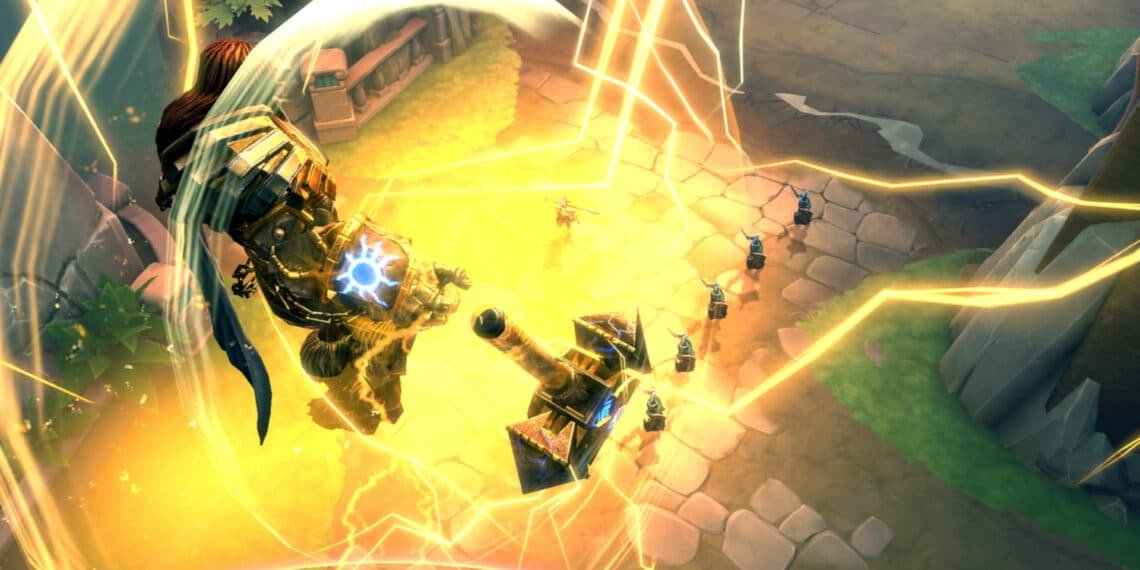
The Unbreakable Barrier: Masters of the Shield
In the chaotic symphony of League of Legends, where damage numbers soar and engage timers dictate destinies, there exists a class of champions who embody the very essence of protection: the shield bearers. These are not merely tanks who soak up damage with their health bars, but artisans of damage negation, capable of erecting instantaneous, temporary health boosts that can snatch victory from the jaws of defeat. Playing a shield champion offers a unique satisfaction, a quiet pride in enabling your team’s carry to unleash their full potential, or in denying a would-be assassin their crucial kill, all while basking in the knowledge that you literally just saved the day with a well-timed ability. Their presence fundamentally alters the flow of battle, transforming what might have been a losing trade into a favorable skirmish with just one flick of a wrist.
The strategic depth offered by shield champions extends far beyond simply pressing a button to grant a temporary health buffer. It’s about precision, anticipation, and understanding the ebb and flow of a team fight. A perfectly timed shield can completely nullify an ultimate ability, allow an ally to escape a dangerous situation, or empower a dive that would otherwise be suicidal. They are the unsung heroes who allow the flashy plays to happen, providing the critical defensive layer that enables aggressive initiations and sustained damage output. Whether it’s turning the tide of a skirmish in the jungle or making an impossible push on the enemy nexus feel suddenly viable, the impact of a skilled shield champion is undeniable, making them perpetually vital to any well-rounded team composition and a joy for many players to master.
The clash of titans – or, more accurately, gods and champions – is a question that echoes through the halls of gaming forums: Smite vs League. Both are titans in the MOBA (Multiplayer Online Battle Arena) genre, offering distinct yet compelling experiences. But which one deserves your precious gaming hours? This guide dives deep into the mechanics, communities, and overall feel of each game to help you make the right choice.
At a glance:
- Perspective: Smite offers a third-person perspective, while League of Legends utilizes a top-down view.
- Gameplay: Smite leans toward action-oriented combat, while League of Legends focuses on strategic planning and positioning.
- Character Roles: Roles are more flexible in Smite, offering greater adaptability. League of Legends has more defined, rigid roles.
- Item System: Smite features a more complex item system, allowing for deeper customization.
- Popularity: League of Legends boasts a larger player base and a more established esports scene.
- Cost: Both games are free-to-play with optional cosmetic purchases.
Gods vs. Champions: Setting the Stage
Before we dive into the nitty-gritty, let's paint a quick picture of each game's core identity.
League of Legends (LoL), developed by Riot Games, is a top-down MOBA where you control a "champion" with unique abilities, working with a team to destroy the enemy's base (the Nexus). Think strategic lane management, calculated team fights, and a steep learning curve filled with intricate item builds and champion matchups.
Smite, on the other hand, developed by Titan Forge Games, throws you into the fray from a third-person perspective. You embody a god from various mythologies, battling across a more intimate battlefield. Combat feels more immediate and action-packed, with an emphasis on aiming skillshots and maneuvering in 3D space. The gods in Smite are divided into deities, immortals, heroes, and mythical beings. There’s a mage, hunter, warrior, assassin, and guardian.
Core Gameplay: A Tale of Two Perspectives
The most immediately noticeable difference between Smite vs League is the camera angle. This simple change profoundly impacts the feel of each game.
- Top-Down Strategy (League of Legends): The bird's-eye view provides a comprehensive overview of the map. This allows for better strategic planning, awareness of ganks (surprise attacks), and coordinated rotations between lanes. It’s like being a general commanding your troops from above. This perspective also makes it easier to observe and understand the flow of the game.
- Third-Person Action (Smite): Smite's over-the-shoulder perspective puts you directly in the god's shoes. This enhances the sense of immersion and makes combat feel more visceral. You'll rely more on your reflexes, aiming accuracy, and spatial awareness. The WASD keys are used to control the player, and then you click for an attack. Think of it as a third-person shooter blended with MOBA elements. One player highlighted the control advantages of WASD movement in Smite for better spatial awareness during combat.
Hero Roles: Flexibility vs. Specialization
Both games feature distinct hero roles, but they approach them differently.
- League of Legends: The Holy Trinity (and More): LoL champions are typically pigeonholed into one of five roles: Top Laner (Tank/Fighter), Jungler (Assassin/Fighter), Mid Laner (Mage/Assassin), AD Carry (Marksman), and Support (Enchanter/Tank). This rigid system encourages specialization and team compositions built around these specific roles.
- Smite: The Adaptable Pantheon: Smite offers a more flexible system. While gods still have preferred roles (Warrior, Assassin, Guardian, Mage, Hunter), many can be effectively played in multiple positions depending on the team composition and player skill. This allows for more unconventional strategies and dynamic gameplay.
Item Systems: Depth vs. Accessibility
Building your character through items is crucial in any MOBA. Here's how Smite vs League stack up.
- League of Legends: Streamlined Power: LoL features a relatively simpler item system. Items are categorized into clear tiers, and their effects are generally straightforward. This makes it easier for new players to understand and adapt their builds. The item system is constantly being iterated on to maintain balance and add new strategic elements.
- Smite: A Labyrinth of Choices: Smite's item system is far more complex. With a larger pool of items and intricate passive effects, players have much more freedom to customize their builds. This allows for more creative and strategic itemization, but it requires a deeper understanding of the game's mechanics.
Learning Curve: How Much Effort Will It Take?
MOBA games are notorious for their steep learning curves. Which game is more forgiving to newcomers? While some find that Smite is a good game for beginners, others would argue that League of Legends has a more strategic gameplay style and a more rigid system of hero roles.
- League of Legends: A Mountain to Climb: LoL has a reputation for being difficult to learn. The sheer number of champions (159 as of February 2022) and items, combined with the intricate strategic elements, can be overwhelming for new players.
- Mitigating Factors: Riot Games has implemented numerous tutorials and in-game guides to help new players learn the ropes.
- Smite: A More Gentle Slope: While still complex, Smite tends to be more accessible to beginners. The third-person perspective makes combat more intuitive, and the smaller god pool (118 as of February 2022) reduces the initial learning burden.
- Caveats: Mastering Smite's mechanics still requires dedication and practice.
Community and Esports: The Bigger Picture
Beyond the gameplay itself, the community and esports scene play a significant role in a game's longevity and appeal.
- League of Legends: A Global Phenomenon: LoL is the undisputed king of MOBAs in terms of player base and esports viewership. The League of Legends Championship Series (LCS) and Worlds tournaments attract millions of viewers. As of 2021, LoL had 180 million players. On average, 130,255,019 played League of Legends within the last 30 days, according to Active Player.
- Smite: A Dedicated Following: While not as massive as LoL, Smite has a loyal and passionate community. The Smite Pro League (SPL) offers a competitive scene, although with smaller prize pools and viewership numbers. As of 2021, Smite had around 30 million players in total. On average, 293,357 played Smite within the last 30 days, according to Active Player. It seems like Smite peaked sometime in 2019 and saw a significant drop in players later on. As an example, the prize for the 2016 World Championship in Smite was 1 million USD, compared to the prize for the League of Legends Championship, which was 5 million USD.
System Requirements: Can Your PC Handle It?
Before you download either game, make sure your computer meets the minimum system requirements. Generally speaking, League of Legends is less demanding than Smite.
- League of Legends (Minimum):
- CPU: Intel Core i3-530 / AMD A6-3650
- Smite (Minimum):
- CPU: Core 2 Duo 2.4 GHz or Althon 64 X2 2.7 GHz
- RAM: 2 GB (XP), 3 GB (Vista, Win7)
- OS: Windows XP SP2, Windows Vista, or Windows 7
- VIDEO CARD: ATI Radeon 3870 or higher, Nvidia GeForce 8800 GT or higher
- FREE DISK SPACE: 10 GB
Free-to-Play Models: What's the Catch?
Both Smite and League of Legends are free-to-play, but they utilize different monetization strategies. Don't worry, these strategies should not impact your enjoyment of the game.
- League of Legends: You can unlock champions using "Blue Essence" earned through gameplay, or purchase them with "Riot Points" (RP). RP can also be used to buy cosmetic skins and other vanity items.
- Smite: Similar to LoL, you can unlock gods using "Favor" earned through gameplay or purchase them with "Gems." Smite also offers a "God Pack" which unlocks all current and future gods for a one-time purchase. Gems are used to buy skins and other cosmetic items.
Smite vs League: Resolving Common Questions
Let's tackle some frequently asked questions from players debating between Smite vs League.
- Which game is more challenging? This is subjective. Some players say that Smite relies on gods matchups and powerspikes for difficulty, while others believe that League features complex abilities and item mechanics. Both games offer unique challenges impossible to compare.
- Which game has a more toxic community? Both games have their share of toxicity. Mute functions and reporting systems are in place to manage disruptive behavior. Another user emphasized the crucial aspect of teammates’ impact on the perceived difficulty of Smite.
- Which game has better graphics? Smite generally boasts more advanced graphics due to its third-person perspective and more detailed character models. However, graphics are subjective and depend on personal preference.
Making the Choice: Which MOBA Reigns Supreme for You?
So, which game should you choose? The answer depends on your personal preferences.
Choose Smite if:
- You prefer action-oriented combat over strategic planning.
- You enjoy the third-person perspective and direct control over your character.
- You appreciate a more flexible system of hero roles.
- You like the idea of playing as mythological gods.
Choose League of Legends if: - You prefer strategic, top-down gameplay with a focus on teamwork and coordination.
- You enjoy a large and diverse roster of champions.
- You are drawn to a highly competitive esports scene.
- You thrive on mastering complex mechanics and item builds.
Ultimately, the best way to decide is to try both games for yourself. Tunjangan DPR Naik? Simak Ini They are both free-to-play, so you have nothing to lose! Perhaps you can explore similar games after trying both out.